

Operatic Foundations
Researching a relic of the Haymarket theatre

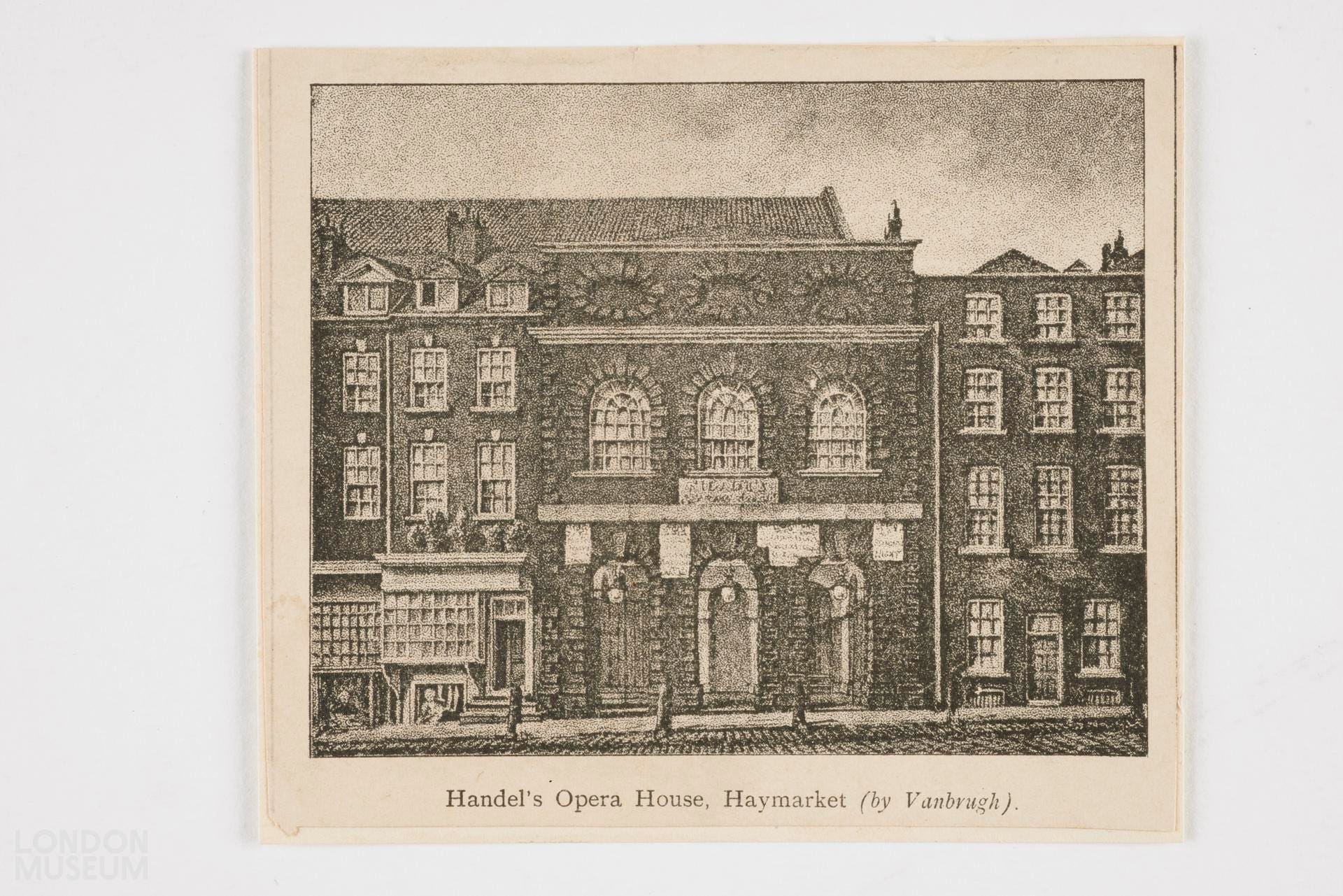
Recently I read that there was an important relic of John Vanbrugh’s Italian opera house in the Haymarket, still extant, in Bedford Row.1 The first Haymarket theatre was co-managed, at least in the first instance, by Vanbrugh and William Congreve (the latter quickly got out when he realised that opera rarely turns a profit). It had its foundation stone laid on April 18th 1704, and it was this – the stone – that I went to see on Bedford Row in the front garden of a law office.
Goodness knows how it got there, but in 1740, the actor Colley Cibber attested that the stone had “Little Whig” engraved on the one side. This was the nickname of Anne, Countess of Sunderland: daughter of John Churchill, Duke of Marlborough, and a favourite of the Kit-Cat Club, who were bankrolling the Haymarket project. A contemporary journalist said the stone was laid “with great Solemnity by a Noble Babe of Grace” – presumably, Anne – adding that “over and under [it] is a plate of Silver, on which is Graven Kit Cat on the one side, and Little Whig on the other”.
The stones outside number 42 Bedford Row – there are two because the foundation stone has apparently been cut in half – do carry these inscriptions. The “Kitt-Catt” one is slightly recessed, and given the remark above (which must be taken with a pinch of salt because the journalist was a Tory, and therefore probably hostile to the Whig opera house), I did wonder if a plate of silver was fitted into it. I can’t see how silver would have been fitted to the other side or underneath it.
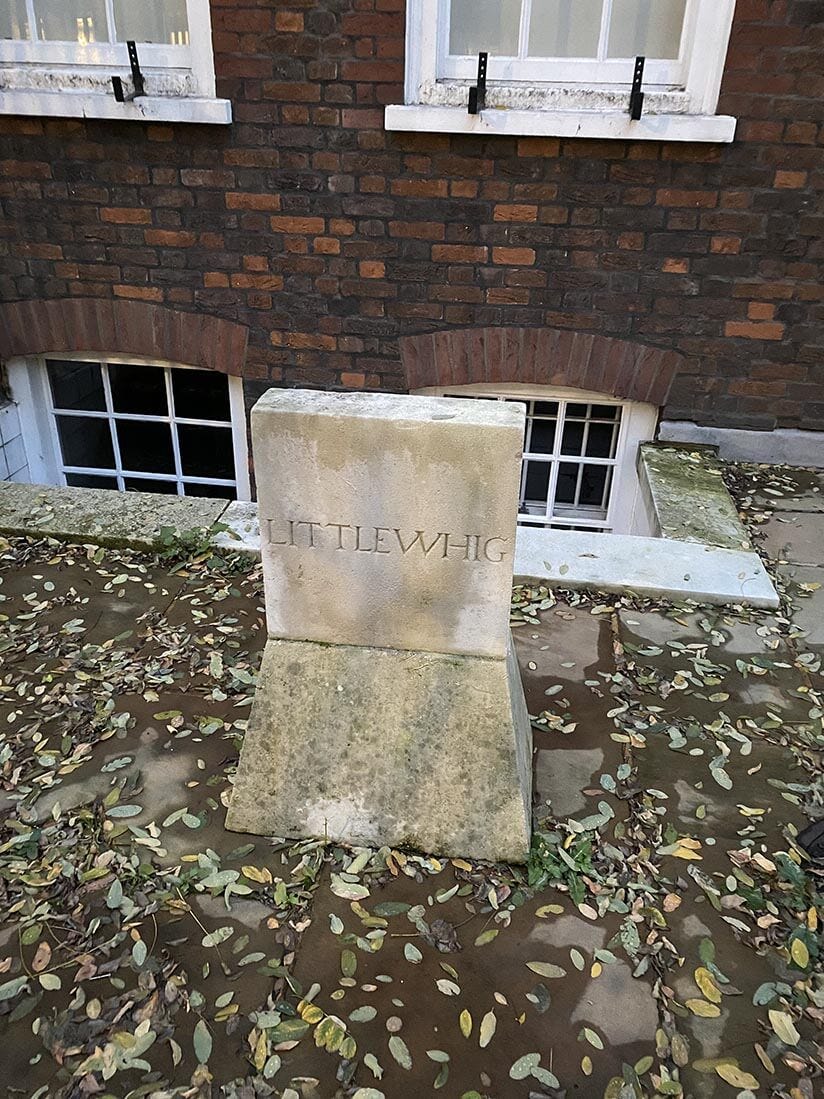
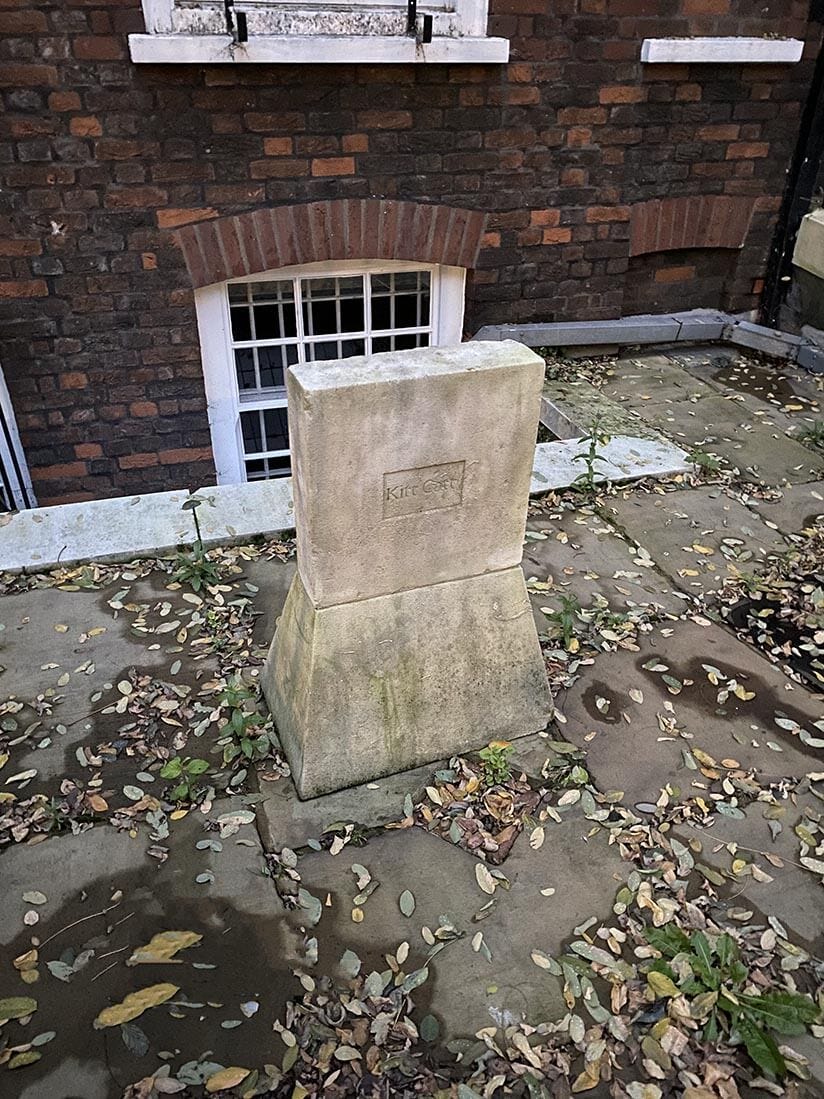
Above I quoted a contemporary journalist who wrote that the foundation stone was laid “with great Solemnity by a Noble Babe of Grace” – i.e., Anne Spencer, Countess of Sunderland – adding that “over and under [it] is a plate of Silver, on which is Graven Kit Cat on the one side, and Little Whig on the other”.
If proof were needed that it’s always best to go back to the original source, I located the quotation (from Charles Leslie’s The Rehearsal of Observator, &c.) and see that Field (or someone she quotes from) has mistranscribed it. It should in fact read “over or under” – OR not AND.
This might seem a small point, but it does raise the question whether Leslie actually saw the laying of the foundation stone at all. I note that he was writing in 1705, after the opening of the Queen’s Theatre, so was at some distance from the event in question. He was also a Tory and pre-disposed to make the Whigs look extravagant (which is why I wanted to know whether he was saying the stone was completely covered in silver or not).
Here is the whole quote from The Rehearsal of Observator, &c.:
The Foundation was laid with great Solemnity, by a Noble Babe of Grace. And over or under the Foundation Stone is a Plate of Silver, on which is Graven Kit Cat on the one side, and Little Whigg on the other. This is in Futuram rei Memoriam, that after Ages may know by what Worthy Hands, and for what good Ends this stately Fabrick was Erected.
By the way, as Field points out, a 19th-century report says that on March 19th 1825, workmen removing part of the walls of the Italian opera house discovered some coins along with a stone bearing the following inscription:
April 18th, 1704. This corner-stone of the Queen’s Theatre was laid by his Grace Charles Duke of Somerset.
Curiouser and curioser.
For more on my current writing projects, see www.annetterubery.co.uk/books.
The source is Ophelia Field’s excellent book, The Kit-Cat Club.